


.png)


Mushrooms have taken centre stage in the wellness world. From capsules and powders to tinctures and warm evening teas, they’ve become staples for people seeking calmer minds, steadier energy, and a bit of natural support through stressful days. But not all mushrooms play the same role, and only a few are truly considered adaptogenic.
If you’ve ever wondered why some mushrooms wear the adaptogen label while others are simply called “functional,” this guide breaks it down in a clear, human way.
What Makes a Mushroom Adaptogenic?
To understand what adaptogenic mushrooms are, it helps to look at the criteria scientists and herbal traditions use to classify adaptogens in the first place. The idea of adaptogens goes back decades. In 1969, researchers Brekhman and Dardymov described adaptogens as substances that help the body stay balanced under stress, without acting like stimulants or sedatives2. The European Medicines Agency later echoed similar criteria in a reflection paper1.
To be considered an adaptogen, a mushroom generally needs to:
- Be non-toxic at normal recommended doses1,2
- Support the body’s ability to maintain equilibrium during physical or emotional stress
- Help modulate stress responses rather than forcing a single effect (like stimulation or sedation).1
These criteria create a much narrower category than many wellness blogs suggest. Plenty of mushrooms have valuable wellness effects, immune modulation, antioxidant support, or metabolic benefits, but only a handful truly fit the adaptogenic mould.
It’s also worth noting that “adaptogen” is not a regulatory or therapeutic classification. It’s a descriptive term, not an official medical claim.
Which adaptogenic mushrooms are rising in popularity recently? Reishi, cordyceps, and lion’s mane continue to lead interest, but chaga and poria have also seen a noticeable rise as people look for gentler, stress-supportive options.
Top Mushrooms Commonly Described as Adaptogenic
Below are the mushrooms most consistently associated with adaptogenic qualities. Each one has its own personality, benefits, and practical cautions, and understanding these nuances makes it easier to choose the right option for your needs.
Reishi (Ganoderma lucidum)
Reishi is often referred to as the “queen of mushrooms,” and for good reason. For centuries, people have used it for calm, grounded energy and emotional steadiness. Today, institutions like Memorial Sloan Kettering Cancer Center describe reishi as potentially influencing stress pathways and supporting immune balance4.
Its adaptogenic reputation comes from its gentle, steadying presence, something many people notice when taking it consistently in the evening.
However, reishi is also one of the mushrooms that requires the most care. Rare case reports link powdered reishi to liver injury, and it may influence blood pressure or bleeding time4. These effects don’t make it unsafe for everyone, but they do mean that people on anticoagulants, antiplatelet drugs, or antihypertensives should speak with a clinician before daily use.
Reishi is widely regarded as one of the strongest adaptogenic mushrooms, especially for stress and emotional balance.
Cordyceps (Cordyceps militaris / sinensis)
If reishi is the calm evening companion, cordyceps is its bright, daytime counterpart. Many people reach for cordyceps when they want more stamina, endurance, or a steadier kind of energy. A recent meta-analysis suggests cordyceps supplementation may support athletic and immune markers in adults, though results vary5.
Cordyceps is considered adaptogenic because it appears to support energy production and physical stress adaptation without working like a stimulant. Some people do notice a light, uplifting effect, which is why it’s usually taken earlier in the day.
Cordyceps holds a strong adaptogenic profile, especially for physical resilience. People sensitive to nighttime stimulation may prefer to avoid taking it too close to bed.
Lion’s Mane (Hericium erinaceus)
Lion’s mane is most famous for its relationship to cognitive pathways. Reviews highlight its compounds linked with nerve growth factor (NGF) activity6, and many users describe clearer thinking or steadier mood over time. However, a 2025 acute RCT showed limited short-term cognitive effects7, which is why researchers still debate its adaptogenic status.
Rather than fitting the classical definition, lion’s mane sits somewhere in between, often described as borderline adaptogenic, but better understood as a functional mushroom with potential brain-supportive properties.
Some people find it mildly energising or slightly unsettling if taken very late, so morning or early afternoon tends to work best. When people compare lion’s mane vs reishi adaptogenic mushrooms, lion’s mane is usually associated with cognitive clarity, while reishi is more often linked with stress balance.
Chaga (Inonotus obliquus)
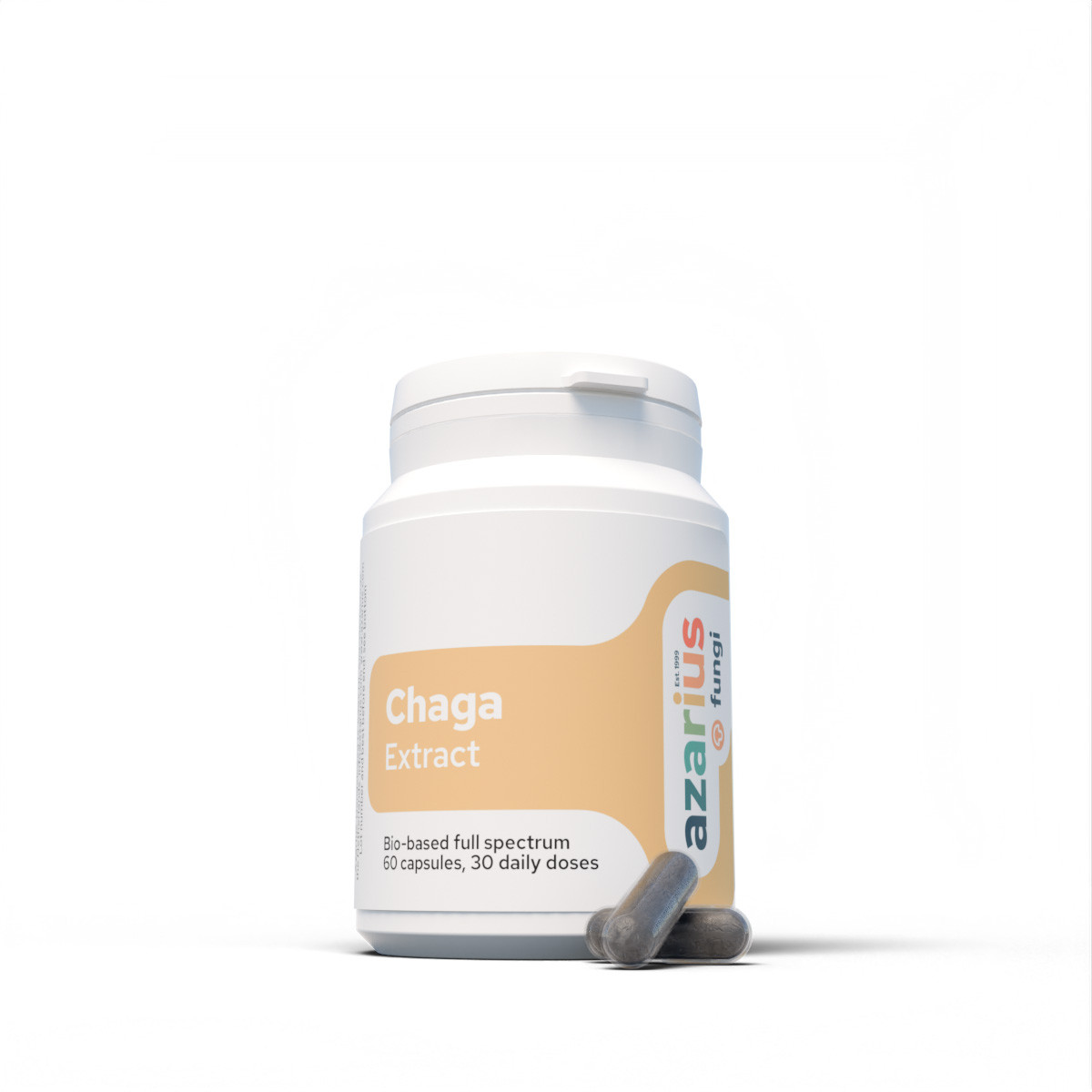
Chaga’s deep, charcoal-like exterior hints at its antioxidant strength. Modern reviews highlight its polyphenols and immune-modulating potential8. Some practitioners view chaga as adaptogenic because of its steady, grounding properties, while others classify it primarily as a powerful functional mushroom.
The biggest safety consideration is its naturally high oxalate content, something individuals with a history of kidney stones should keep in mind. Overall, chaga earns a moderate adaptogenic label, though more research is needed to understand its long-term effects.
Top Functional (Non-Adaptogenic) Mushrooms
Many mushrooms support health beautifully, but don’t meet adaptogenic criteria. That doesn’t make them less valuable; it simply means they shine in different areas.
Turkey Tail (Trametes versicolor)
Turkey tail is best known for its gut and immune-supportive compounds, especially PSK and PSP, which are discussed extensively in the National Cancer Institute’s PDQ summaries3. It’s not considered adaptogenic, but it is one of the most thoroughly studied functional mushrooms.
Maitake (Grifola frondosa)
Maitake is rich in beta-glucans and may support metabolic and immune balance9. It often gets grouped with adaptogens online, though this is more a reflection of marketing trends than scientific classification.
Shiitake (Lentinula edodes)
Beyond being a favourite in the kitchen, shiitake has documented cardiovascular and immune-related properties10. It’s a functional mushroom, not an adaptogen, but a remarkably versatile one.
Agaricus blazei
This mushroom is researched for immune and inflammatory pathways11. Because some studies explore tumour-related areas, it must be discussed carefully, and always without medical claims. It is not classified as an adaptogen.
Poria (Poria cocos / Fu Ling)
Used widely in Traditional Chinese Medicine, poria is valued for calm, digestion, and fluid balance. Modern reviews highlight its immune and anti-inflammatory properties12. Some practitioners consider it borderline adaptogenic, though it lacks the widespread recognition of reishi or cordyceps.
Tremella (Tremella fuciformis)
Also known as the “beauty mushroom,” tremella is studied primarily for skin hydration and antioxidant effects13. Evidence is mostly preclinical, and it is not considered adaptogenic.
| Mushroom | Adaptogenic status | Primary benefits (general) | Notes |
|---|---|---|---|
| Reishi | Strong | Calm, stress balance, immune modulation | Use cautiously with blood pressure or blood thinners |
| Cordyceps | Strong | Energy, stamina, physical stress support | Best taken earlier in the day |
| Lion’s Mane | Borderline | Cognitive and mood support | Evidence mixed; NGF pathways under active research |
| Chaga | Moderate | Antioxidant and immune pathway support | Naturally high in oxalates; caution with kidney issues |
| Turkey Tail | Not adaptogenic | Gut and immune support | Classic functional mushroom (PSK/PSP studied) |
| Maitake | Not adaptogenic | Immune and metabolic support | Sometimes mislabelled as adaptogenic |
| Shiitake | Not adaptogenic | Cardiovascular and immune support | Culinary + functional use |
| Agaricus blazei | Not adaptogenic | Immune modulation | Emerging evidence; interpret tumour data cautiously |
| Poria (Fu Ling) | Borderline | Calming, digestive and fluid balance | Traditional Chinese Medicine background |
| Tremella | Not adaptogenic | Skin hydration and antioxidant support | Evidence mostly preclinical/early-stage |
Bringing Balance With Adaptogenic Mushrooms
Adaptogenic mushrooms can be a gentle way to support balance during busy or demanding seasons of life. If you’re curious about trying them, a thoughtful, slow approach tends to work best: choose one mushroom, take it consistently for a few weeks, and observe how your body responds.
Here are a few UK-friendly ways people like to incorporate them:
- Morning lion’s mane stirred into coffee for a focused start
- Cordyceps tea before a run or workout
- Reishi hot cocoa as part of an evening wind-down routine
- Chaga tea on cold, grounding days
If you choose to explore adaptogenic mushrooms, look for third-party-tested, standardised extracts. These provide clearer information about beta-glucan content and purity. And as always, if you take medication or have underlying health concerns, check in with a clinician before beginning daily use.
References
- European Medicines Agency (HMPC). Reflection paper on the adaptogenic concept. 2008. Available at: https://www.ema.europa.eu/en/adaptogenic-concept-scientific-guideline ↩︎
- Brekhman II, Dardymov IV. New substances of plant origin which increase nonspecific resistance. Annu Rev Pharmacol. 1969;9:419–430. Available at: https://doi.org/10.1146/annurev.pa.09.040169.002223 ↩︎
- National Cancer Institute. Medicinal Mushrooms (PDQ®). Updated 2024. Available at: https://www.cancer.gov/about-cancer/treatment/cam/hp/mushrooms-pdq ↩︎
- Memorial Sloan Kettering Cancer Center. Reishi Mushroom (monograph). Updated 2023. Available at: https://www.mskcc.org/cancer-care/integrative-medicine/herbs/reishi-mushroom ↩︎
- Shu M-Y, Zhang X-C, Zuo L, et al. Effects of fungal supplementation on endurance and immune function: systematic review and meta-analysis. Front Nutr. 2025;12:1670416. Available at: https://www.frontiersin.org/articles/10.3389/fnut.2025.1670416/full ↩︎
- Bhatia R, et al. Neuroprotective and cognitive effects of Hericium erinaceus: current evidence. Nutrients. 2024. Available at: https://pmc.ncbi.nlm.nih.gov/articles/PMC12030463/ ↩︎
- Chang C-J, et al. Acute effects of Hericium erinaceus extract on cognition and mood: randomized crossover trial. Front Nutr. 2025;8:1405796. Available at: https://www.frontiersin.org/articles/10.3389/fnut.2025.1405796/full ↩︎
- Ganesan K, Xu B. Therapeutic properties of Inonotus obliquus: review. Plant Biosyst. 2023–2024. Available at: https://www.tandfonline.com/doi/pdf/10.1080/21501203.2023.2260408 ↩︎
- Binek A, et al. Bioactive ingredients and medicinal values of Grifola frondosa. Foods. 2021;10(1):95. Available at: https://www.mdpi.com/2304-8158/10/1/95 ↩︎
- Rathore H, et al. Nutraceutical properties of Lentinula edodes. Ind Crops Prod. 2023;195:116392. Available at: https://www.sciencedirect.com/science/article/pii/S0924224423000821 ↩︎
- Hetland G, et al. Antitumor and immune effects of Agaricus blazei. Nutrients. 2020;12(5):1339. Available at: https://www.mdpi.com/2072-6643/12/5/1339 ↩︎
- Sun X, et al. Medicinal value of Poria cocos polysaccharides. Polym Bull. 2024. Available at: https://link.springer.com/content/pdf/10.1007/s00289-024-05499-0.pdf ↩︎
- Guo Y, et al. Cutaneous benefits of Tremella fuciformis. Arch Dermatol Res. 2023. Available at: https://link.springer.com/article/10.1007/s00403-023-02550-4 ↩︎