


.png)


If you’re asking, “What should I look for when buying kanna supplements?”, you’re not alone. Interest in kanna supplements has grown steadily, but the quality of these products remains inconsistent. Many labels sound reassuring, yet offer very little clarity about what’s actually inside the capsule or powder.
Kanna, also known as Sceletium tortuosum, has a documented traditional use in southern Africa and is now sold globally as capsules, powders, tinctures, and extracts.1
This guide focuses on the factors that matter most when choosing a supplement, from extract type and dosage to safety, testing, and the legal context of kanna supplements, so you can make an informed decision without guesswork.
Why People Use Kanna Supplements
People explore kanna supplements for different reasons, most often linked to mood, emotional balance, and mental focus. Traditional accounts describe kanna as supporting social ease, while modern research suggests its mesembrine-type alkaloids may modulate serotonin signalling. Some standardised extracts have also been discussed in relation to PDE-4 pathways, depending on their alkaloid profile.2
It’s important to keep expectations grounded. Responses vary, and effects are typically subtle, shaped by the product used, the dose, and individual sensitivity. Some people notice a gentle easing of tension or a slightly clearer headspace, while others feel little change at all.
From a research perspective, evidence remains limited. There has been at least one randomised controlled trial in healthy adults using a standardised extract; however, broader clinical evidence remains incomplete. This makes product quality and transparency especially important for consumers.3
Is It Safe to Stack Kanna Supplements With Other Herbs?
Stacking supplements can increase risk, particularly for newcomers. Because kanna may influence serotonin pathways, combining it with other serotonergic substances, including SSRIs or MAOIs, raises the risk of serotonin syndrome.4
A cautious approach is to introduce one supplement at a time and avoid combinations that act on similar systems. If you’re unsure whether a medicine or herb affects serotonin, that uncertainty alone is a reason to pause.
Key Factors to Consider When Buying Kanna Supplements
When comparing kanna supplements, the most useful information is specific and verifiable. Clear, concise descriptions and transparent potency information, along with evidence of testing, matter far more than broad marketing claims.
Type of Extract (Raw vs Standardised)
One of the first distinctions to understand is whether a product uses raw kanna or a standardised extract. Raw kanna powder is simply dried and ground plant material, and its alkaloid content can vary considerably depending on cultivation and processing methods.
Standardised extracts are processed to deliver a more consistent alkaloid profile, often focusing on mesembrine-type compounds. This consistency can make effects more predictable from one batch to the next.
That said, “extract” does not automatically mean “standardised”. If a label doesn’t clearly state what the extract is standardised to, consistency cannot be assumed.
Dosage and Potency
Dosage is one of the most confusing aspects of supplement labels, which is why a clear kanna dosage guide is essential.
Milligrams of raw plant material are not equivalent to milligrams of extract. Reputable labels explain whether the stated dose refers to raw kanna or extract, and whether that extract is standardised.
For example, 50 mg of an extract standardised to 2% mesembrine implies 1 mg of mesembrine. If this information isn’t available, comparing products meaningfully becomes difficult.
Form of Supplement (Capsules, Powders, Tinctures)
Kanna supplements come in several forms, each with practical differences.
Capsules offer convenience and consistent dosing. Powders allow gradual adjustment but require careful measuring. Liquid tinctures can feel convenient, though they often vary widely in concentration and taste.
When weighing the benefits of kanna capsules versus powder, the best choice is usually the one that fits your routine and comfort level, rather than the one promising the strongest effects.
| Form | Key strengths | Key drawbacks | Often chosen by |
|---|---|---|---|
| Capsules | Simple, discreet, consistent | Less flexible dosing | Beginners, routine users |
| Powder | Adjustable amounts | Measuring needed, bitter taste | Experienced users |
| Tinctures | Convenient | Variable strength, strong taste | Those familiar with extracts |
Third-Party Testing and Certifications
What ingredients should I check for when buying kanna supplements? Beyond the kanna itself, independent testing is one of the clearest indicators of quality.
Reputable brands can provide a recent Certificate of Analysis linked to the batch or lot number. Ideally, this testing is carried out by a laboratory accredited to ISO/IEC 17025, which sets recognised standards for testing competence.5
A typical CoA should confirm identity and screen for contaminants such as heavy metals and microbiological issues. Testing does not guarantee effectiveness, but it reduces uncertainty about what you’re consuming.
How Can I Tell if a Kanna Supplement Is High Quality?
High-quality kanna supplements tend to share a few traits. Labels are specific rather than vague, extract types are clearly described, and potency information is explained in plain language.
Responsible products also avoid exaggerated claims. They acknowledge variability and present supplements as optional tools rather than guaranteed solutions.
In the UK, for example, products sold as food supplements must meet food law and labelling expectations set out by the Food Standards Agency and related regulations.6
Where to Buy Trusted Kanna Supplements
Are there any trusted brands for kanna supplements that you recommend? Rather than focusing on names, it’s often more useful to assess how a supplier operates.
Trusted sellers provide clear ingredient information, explain their extract types, and can supply batch-specific testing data. Red flags include proprietary blends without specified percentages, exaggerated claims, and unclear sourcing information.
Kanna Supplement Side Effects and Safety Considerations
Like many supplements, kanna can cause unwanted effects in some people. Reported kanna supplement side effects include nausea, headache, or restlessness, particularly at higher doses or with concentrated extracts.
The most significant safety concern is the risk of an adverse interaction. Kanna should not be combined with serotonergic medicines such as SSRIs or MAOIs, due to the risk of serotonin syndrome. Starting low and avoiding rapid increases helps reduce discomfort.
Are Kanna Supplements Legal?
Questions about the legal status of kanna products are common. In the UK, for example, kanna supplements are generally sold under food supplement regulations, provided they meet labelling and safety requirements.
At the same time, the Psychoactive Substances Act 2016 restricts the supply of psychoactive substances that are not exempt, and interpretation can depend on context and intent. Laws vary internationally and are subject to change, so it is always advisable to check current local guidance.7
Final Checklist for Choosing the Right Kanna Product
When deciding what to look for when buying kanna supplements, bringing everything together helps clarify the choice. A reputable product clearly states:
- Whether it uses raw kanna or a standardised extract
- Explains dosage and potency transparently
- Provides evidence of independent testing
The type of product should also suit your daily routine, with safety information that should be easily accessible, and claims should be presented in a measured manner rather than exaggerated.
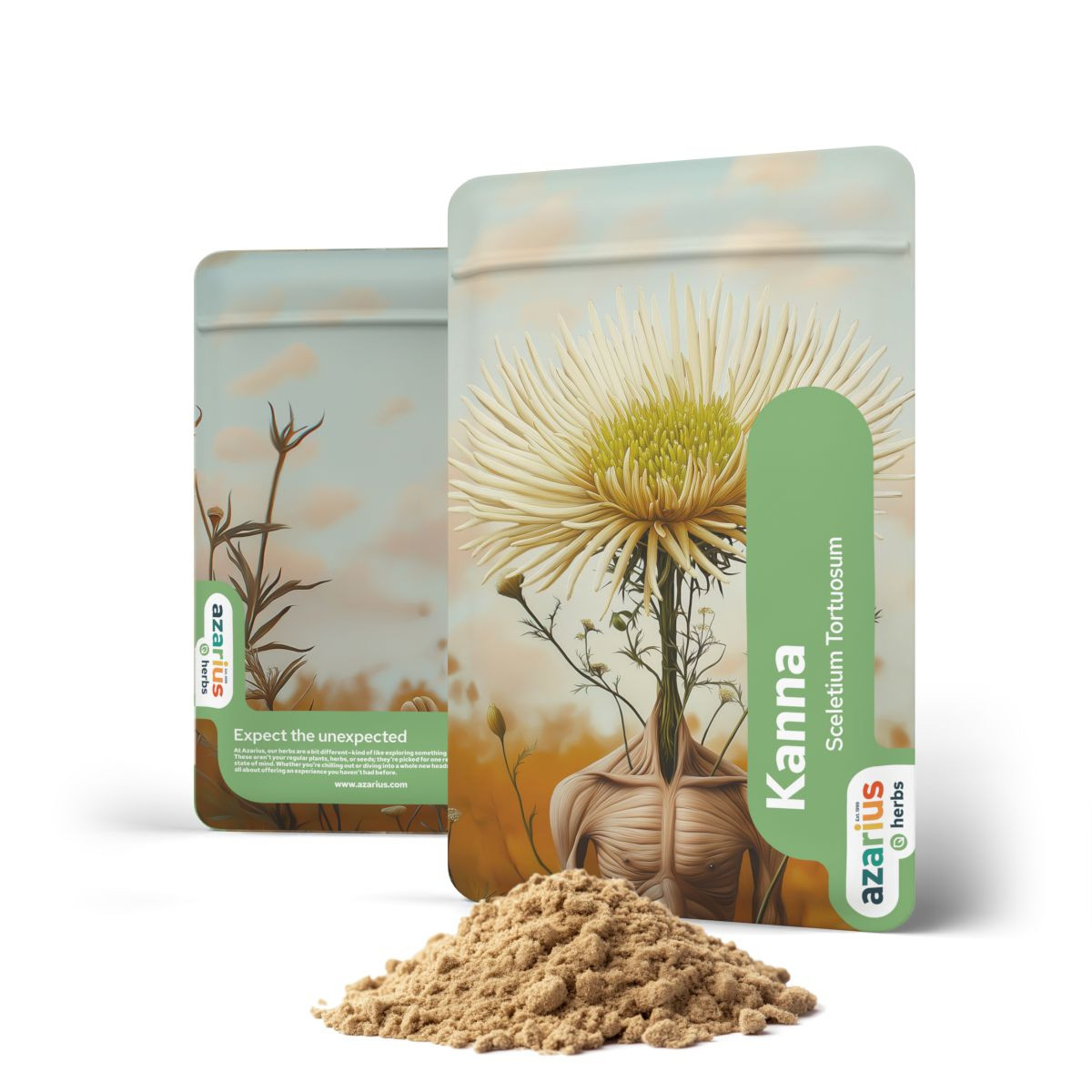
Kanna extract
ET2 Extract (1g)Whether you’re comparing everyday options or searching for what some call the best kanna supplement 2025, these fundamentals matter far more than buzzwords or marketing language.
References
- Olatunji TL, Siebert F, Adetunji AE, et al. Sceletium tortuosum: A review on its phytochemistry, pharmacokinetics, biological and clinical activities. Journal of Ethnopharmacology. 2021;280:114476. doi:https://doi.org/10.1016/j.jep.2021.114476 ↩︎
- Terburg D, Syal S, Rosenberger LA, et al. Acute Effects of Sceletium tortuosum (Zembrin), a Dual 5-HT Reuptake and PDE4 Inhibitor, in the Human Amygdala and its Connection to the Hypothalamus. Neuropsychopharmacology. 2013;38(13):2708-2716. doi:https://doi.org/10.1038/npp.2013.183 ↩︎
- Nell H, Siebert M, Chellan P, Gericke N. A Randomized, Double-Blind, Parallel-Group, Placebo-Controlled Trial of Extract Sceletium tortuosum (Zembrin) in Healthy Adults. The Journal of Alternative and Complementary Medicine. 2013;19(11):898-904. doi:https://doi.org/10.1089/acm.2012.0185 ↩︎
- NICE. Selective Serotonin Reuptake Inhibitors (SSRIs). NICE. Published 2023. https://cks.nice.org.uk/topics/depression/prescribing-information/ssris/ ↩︎
- UKAS. Laboratory Accreditation. UKAS. Published 2024. https://www.ukas.com/accreditation/standards/laboratory-accreditation/ ↩︎
- Food Standards Agency. Food supplements. Food Standards Agency. Published March 24, 2021. https://www.food.gov.uk/business-guidance/food-supplements ↩︎
- UK Government. Psychoactive Substances Act 2016. Legislation.gov.uk. Published 2016. https://www.legislation.gov.uk/ukpga/2016/2/contents ↩︎